
SUSTAINABILITY
The Highland Sustainability Commitment
Highland’s commitment to sustainability is at the core of who we are. Our pledge to operate in a transparent, ethical manner is essential to how we conduct business with our customers, our partners, and our stakeholders. Our commitment extends beyond current U.S. standards to the stringent European standards provided by the Sustainable Biomass Program, the Renewable Energy Directive and EU Deforestation Regulations.
Highland Pellets Procurement Strategy
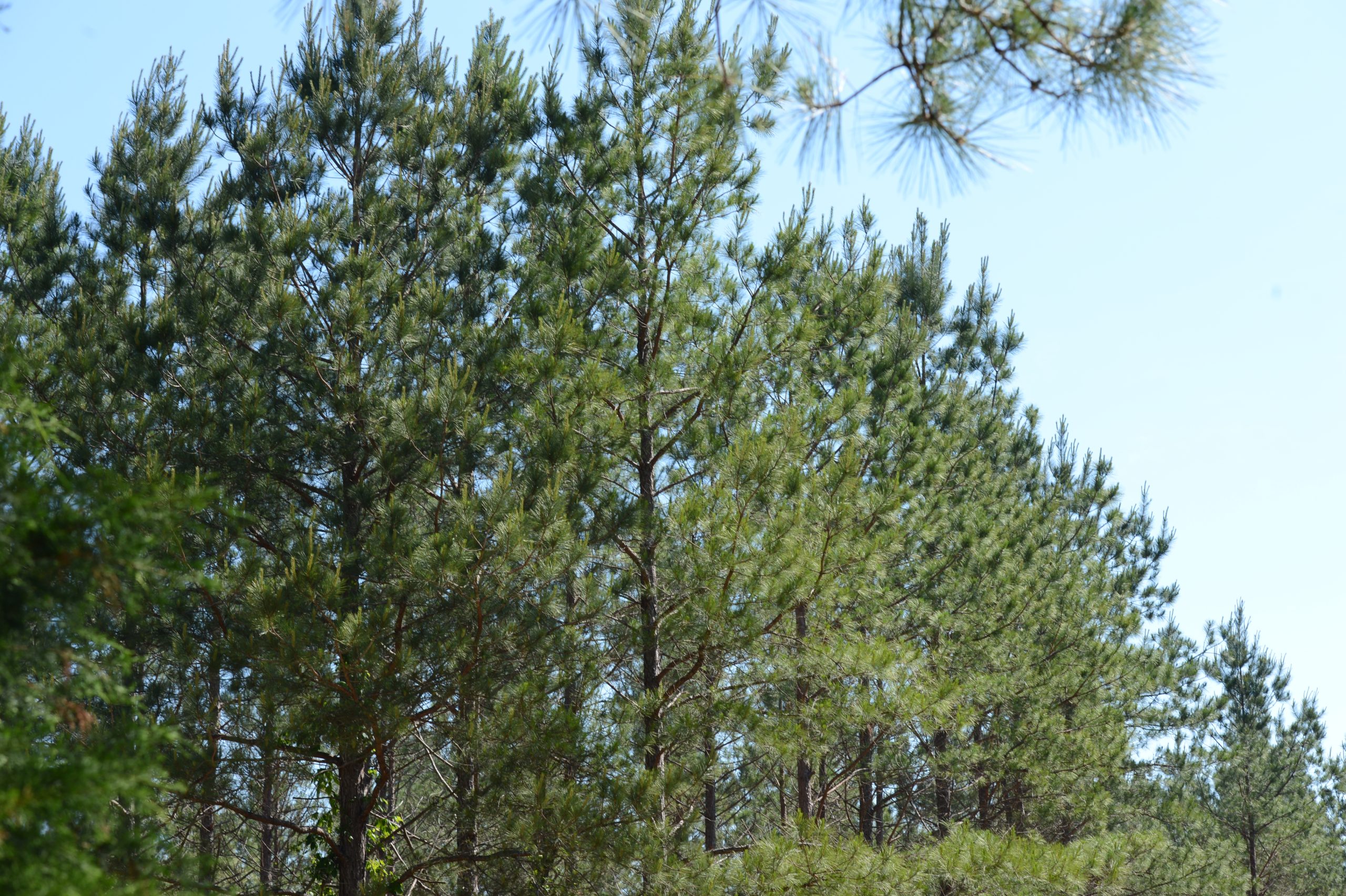
Highland does not use any large trees that have greater value as sawlogs or poles — it is commercially disadvantageous to do so. All the tree thinnings have low market value with limited local demand. Highland does not source any wood from virgin forests or areas with protected species. Every truck load of wood used by Highland is tracked and traced, verifying its origin from commercial working forests which are proven to meet the high sustainability standards of the European market. This means that Highland must demonstrate that the wood it is using is sourced from legal and sustainable sources which do not harm the local environment, wildlife or local inhabitants. To do this, Highland provides detailed evidence to its auditors each year of where it is purchasing its wood. This requires compliance with a European standard known as the Sustainable Biomass Program (SBP) which demands more evidence than is provided through local sustainable forest programs, such as the Sustainable Forestry Initiative® (SFI). Highland will also be compliant with the EU Deforestation Regulations (EUDR) which will be implemented shortly and require Highland to provide evidence of exactly where it sources its wood fiber.
The responsible thinning and harvesting of working forests ensure that landowners have a stake in the sustainability of their holdings and provides an incentive for the owners to reinvest into growing their working forests. This in turn supports a much needed ‘in-woods’ industry that many families rely on for their livelihoods and is an economic driver for rural areas. Highland has repeatedly heard from local citizens who have delayed thinning their working forests for many years because there are insufficient markets to sell their wood. Forests that are not thinned will become over-crowded so that the value and quality of the holdings will deteriorate over time.
The practice of thinning has multiple benefits:
- Improving forest health by removing poor quality, deformed trees and strategic portions of the stand of fiber, allowing the remaining stand greater access to light, water and nutrients so as to increase productivity and growth into higher value products
- Capturing fiber from trees that would otherwise die from overcrowding
- Lowering fire hazard and susceptibility to insects and disease
- Allowing the landowner access to another source of revenue
- Allowing for visual and volume variety in an otherwise similar age group of timber
- Modifying the stand structure for the benefit of wildlife habitat or biodiversity
A stand of timber has a point of maturation where both the economic value and health of the stand begin to decline. This is when a land manager will typically perform a final harvest. During this stage, the majority of the fiber is sorted for higher value products such as saw timber, ply logs and poles. There is, however, also a need for a market for the unwanted treetops and lower quality wood fiber that are not usually merchantable from any timber stand. Tree tops that are left over from the harvesting of sawlogs and telephone poles are either burned or left to rot if they can’t be sold.
The tops, branches and smaller poor-quality trees that will not meet the criteria for higher value products are an important part of the fiber mix for our facility at Pine Bluff, thereby enabling a greater use of every tree. Access to this market will add to the economic value for landowners investing and continuing forest management in the Pine Bluff area.
Forests absorb carbon dioxide from the atmosphere and therefore play a crucial role in reducing global GHG emissions. A forest that has been well managed is more likely to be healthy, provide environmental and biodiversity benefits and absorb more carbon dioxide from the air than if the same forest contained over-crowded trees competing for light, water and nutrients.
Adverse Weather Policy
In wet weather, harvesting timber is more likely to cause environmental damage due to rutting of wet ground by forest machinery and greater water run-off from harvest areas into neighboring streams. Highland helps to reduce the likelihood of environmental damage by working to build a strong wood inventory prior to the winter months when there is a greater risk of prolonged wet weather. In addition, the procurement staff conducts forest checks of best management practices (BMP). Conducting BMP checks allows us to verify that good practices are being followed year-round (e.g., set down of branches and treetops onto the forest floor to reduce damage to the forest floor, use of dual or high flotation tire). We give our suppliers feedback that can improve on any problematic areas. In truly intense weather, such as a hurricane, Highland holds the right to curtail procurement if there is a risk that continued harvesting would lead to environmental damage of the forests.

Highland Sustainable Forestry Policy
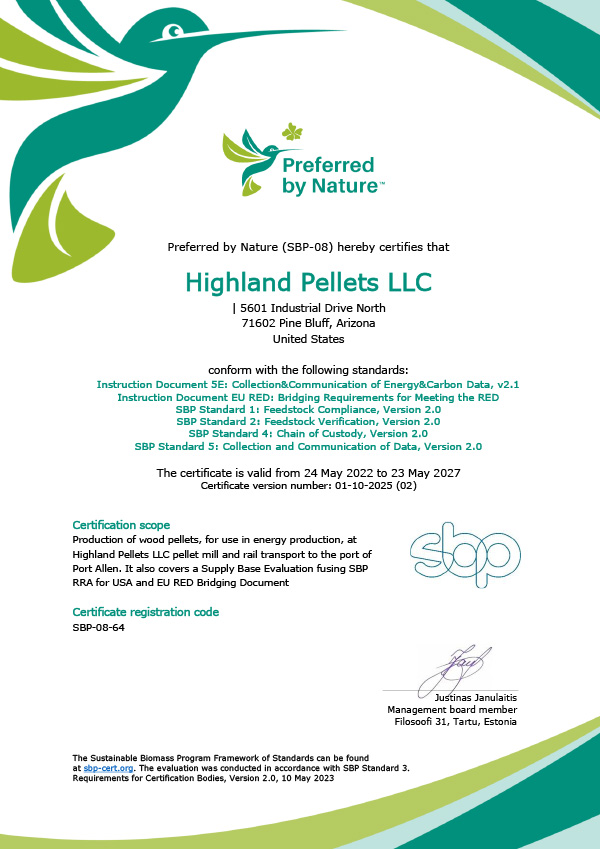
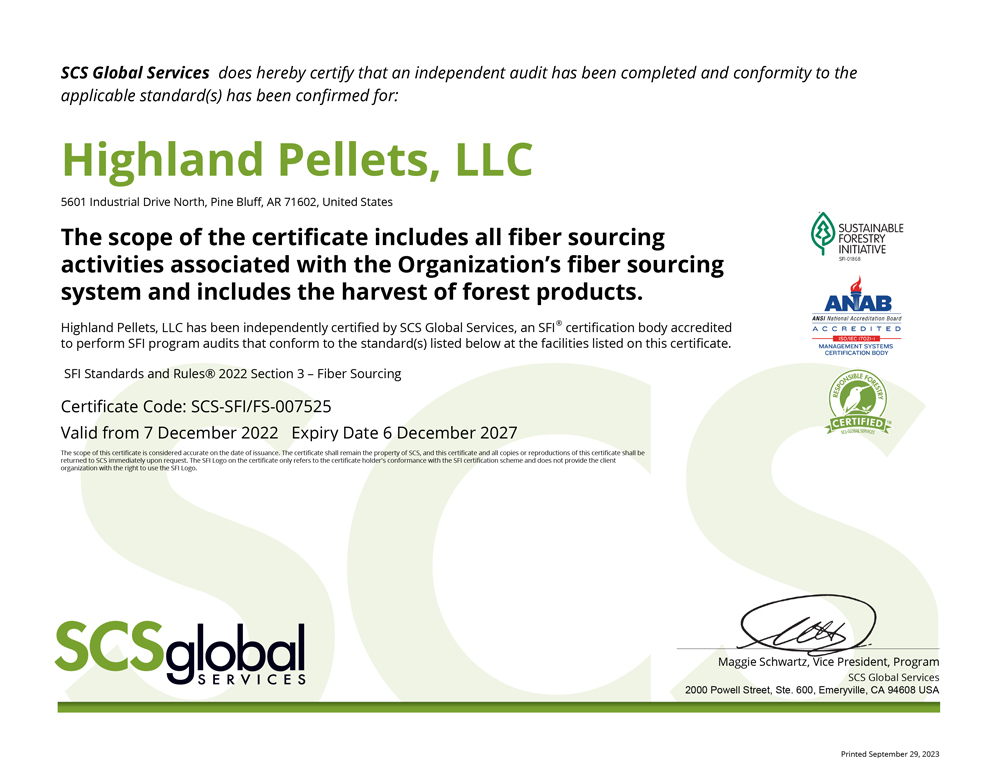
Highland is committed to continually achieve certification to the Sustainable Biomass Program (SBP), Sustainable Forestry Initiative® (SFI) Fiber Sourcing Standard, Forest Stewardship Council® (FSC®) and Programme for the Endorsement of Forest Certification (PEFC) Chain of Custody and Controlled Wood Standards, as well as comply with applicable environmental, social, and health and safety laws and regulations.
Highland supports strong labor laws and commits to observe and give effect to the below:
- The organization shall not use child labor.
- The organization shall not employ workers below the age of 15, or below the minimum age as stated under national, or local laws or regulations, whichever age is higher, except as specified in the following: In countries where the national law or regulations permit the employment of persons between the ages of 13-to-15 years in light work, such employment should not interfere with schooling nor, be harmful to their health or development. Notably, where children are subject to compulsory education laws, they shall work only outside of school hours during normal daytime working hours.
- No person under the age of 18 is employed in hazardous or heavy work except for the purpose of training within approved national laws and regulations.
- The organization shall prohibit the worst forms of child labor.
- The organization shall eliminate all forms of forced and compulsory labor.
- Employment relationships are voluntary and based on mutual consent, without the threat of a penalty.
- There is no evidence of any practice using forced or compulsory labor, including, but not limited to, the following:
- physical and sexual violence
- bonded labor
- withholding of wages /including payment of employment fees and or payment of deposit to commence employment
- restriction of mobility/movement
- retention of passport and identity documents
- threats of denunciation to the authorities
- The organization shall ensure that there is no discrimination in employment and occupation.
- Employment and occupation practices are non-discriminatory.
- The organization shall respect freedom of association and the effective right to collective bargaining.
- Workers are able to establish or join worker organizations of their own choosing.
- The organization respects the full freedom of workers’ organizations to draw up their constitutions and rules.
- The organization respects the rights of workers to engage in lawful activities related to forming, joining or assisting a workers’ organization, or to refrain from doing the same, and will not discriminate or punish workers for exercising these rights.
- The organization negotiates with lawfully established workers’ organizations and/or duly selected representatives in good faith and with the best efforts to reach a collective bargaining agreement.
- Collective bargaining agreements are implemented where they exist.
- Indigenous Peoples’ rights, workers’ and communities’ right to know, and use of prevailing wages are respected.
Highland’s commitment to sustainability is at the core of our foundation. Our pledge to operate in a transparent, ethical manner is essential to how we conduct business with our customers, our partners and with our own stakeholders. That commitment extends beyond the current U.S. standards, as we will also be in complete compliance with stringent European standards provided by the Sustainable Biomass Program (SBP)[1]. We are in the business of delivering sustainable fuel products. Our business can only succeed if we make sustainability a key principle for Highland.
Highland promotes the practice of sustainable forest management including:
- Sustainable Forestry
- Forest Productivity and Health
- Protection of Water Resources
- Protection of Biological Diversity
- Aesthetics and Recreation
- Protection of Special Sites
- Legal Compliance
- Research
- Training and Education
- Community Involvement and Social Responsibility, and respect for Indigenous Rights
- Transparency
- Continued Improvement
- Responsible Fiber Sourcing
In production, our commitment to sustainability extends to minimizing our energy use in both our pellet production and transport logistics. To the extent commercially practicable, we use all the waste bark from our roundwood deliveries as fuel for our drying process to reduce our greenhouse gas emissions. Our pellets are transported to port by rail or barge to help minimize our transportation emissions. Each Highland pellet site undertakes a detailed independent sustainability audit each year to ensure that our fiber supply is sourced and used to the high sustainability regulations required by customers.
Summary:
Highland’s wood pellet business is environmentally friendly and sustainable in several ways:
- Wood pellets directly replace coal burned in European power stations, reducing the emission of GHG emissions by over 80%. 2
- Contributes to protecting the commercial viability of the forestry sector, thereby helping forests to remain as forest rather than be converted to alternative land uses.
- Our wood pellets are sourced from waste material from mills. Our fiber demand creates an additional local market which helps the livelihood of local rural communities.
Highland is committed to sourcing wood and residual fiber from renewable, legal and sustainable sources and to promote the principles of sustainable development and use of renewable resources. It also strives to broaden the practice of sustainable forestry and improve the professionalism of forest workers and the forestry community.
Highland has set an overall goal of increasing the use of renewable wood energy, reducing wood waste and decreasing greenhouse gas emissions. The use of woody biomass as a replacement for fossil fuels is a proven way to improve forest utilization, facilitate regeneration of the forest, reduce the risk of wildfire, reduce carbon emissions, and improve the international trade in forest-based products. It will also provide a market incentive for landowners to keep their lands in forest cover.
To help implement and achieve the above sustainability, renewability and greenhouse gas reduction objectives, Highland has developed and adopted appropriate programs and documented procedures to guide its wood and fiber procurement, sustainable forestry practices, and certification claims.
We are committed to annually review the effectiveness of our Sustainable Forestry Policy, chain of custody and responsible fiber sourcing programs to continually improve our wood procurement systems and to ensure legal and regulatory compliance.
Notes:
[1] https://sbp-cert.org/
A Market for Unwanted Biomass Helps Keep Forests Healthy
Certifications
Forest certification programs ensure that raw materials for Highland products are sourced from forests that prioritize forest health, biodiversity conservation, soil protection, and climate-smart forestry.

SFI is a sustainability leader through its work in standards, conservation, community, and education. Organizations certified to SFI standards conserve wildlife and water, practice climate-smart forestry, and support relationship-building with Indigenous Peoples.
SBP is a certification system designed for woody biomass used in industrial, large-scale energy production. It provides assurance that woody biomass is sourced legally and sustainably. SBP includes a rigorous risk assessment to ensure that the wood is sourced from environmentally, economically, and socially sound practices.
PEFC is an umbrella organization that endorses forest certification systems that have been developed through multi-stakeholder processes and tailored to local priorities and conditions. PEFC endorses SFI.
FSC policies unify a diverse set of stakeholders around common guidelines for forestry that are environmentally appropriate, socially beneficial, and economically viable. FSC’s open and transparent standards include safeguards to ensure that stakeholders throughout the forest supply chain live up to the principles that protect healthy and resilient forests for all—forever.


Community Engagement
Highland recognizes that building relationships with local communities involves being a responsible corporate citizen, contributing positively to community development initiatives, and addressing any concerns or grievances that may arise. We engage with community stakeholders to foster goodwill, support rural economies, and encourage people to see our business as an employer of choice.
Sustaining Rural Economies
Highland contributes to rural economic development by creating stable, well-paying jobs within the forestry and manufacturing sectors. Investments in timber harvesting, processing, and associated industries that supply sustainable wood pellet feedstocks can generate substantial income and employment opportunities for local communities. Sustainable forestry practices also stimulate ecotourism activities such as hiking, mountain biking, hunting, birding, and fishing —attracting visitors and invigorating local businesses.
Resources
Forest of Exceptional Conservation Value (FECV) In Highland’s Supply Region
